


Discover how soil keeps our food growing, our climate stable, and our planet alive—and how small actions by YOU can help save it.
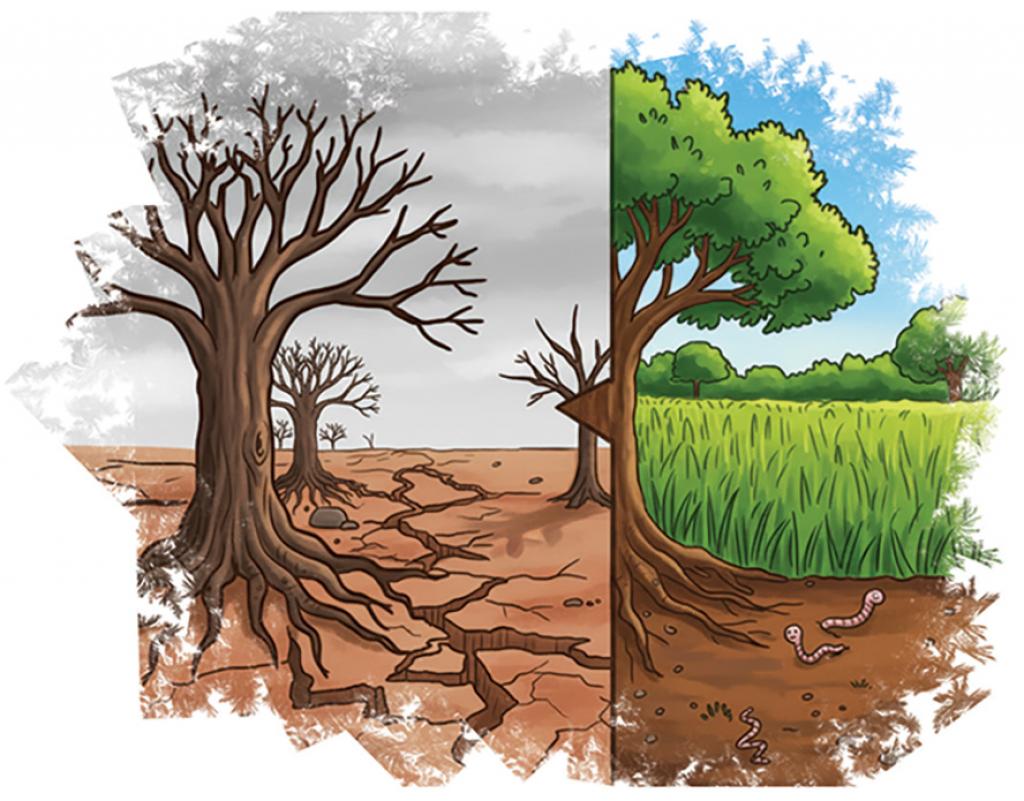
If we die, we are buried in soil. If soil dies…?... Can you visualize the fallouts?
Soil, ‘the thin skin of the earth’ is indeed a wonderful gift of nature to humankind. It holds and filters water, helps plants to grow—not only food-giving but also medicinal—and homes myriad organisms. About 95 per cent of the foods we eat and antibiotics we use/consume originate in the ground underneath! Soil also inactivates pollutants and plays a central role in regulating climate change.
If you look at the Sustainable Development Goals (SDGs) set by the United Nations (UN), soil impacts them significantly. FYI: SDGs are nothing but some global goals aiming to achieve peace and prosperity for people and the planet. Out of the total seventeen SDGs, eight are dependent upon good soil.
• SDG-1 No Poverty: Soil helps in growing food that you can sell and earn money, or it can help you in something as basic as letting you build your shop!
• SDG-2 Zero Hunger: A healthy soil can not only produce nutritious foods but achieve food security for all.
• SDG-3 Good Health and Well-being: Did you know running on mud is far better than any of your artificial tracks?
• SDG-6 Clean Water and Sanitation: Soil absorbs moisture which enables life on land. What more can be told about it!
• SDG-12 Responsible Consumption and Production: To ensure sustainable use of any item, say your pencil and eraser that are made from plants, you first need soil!
• SDG-13 Climate Action: Soil is the biggest storehouse of carbon on earth.
• SDG-14 Life Below Water: Underwater soil is home to incredible aquatic creatures and resources.
• SDG-15 Life on Land: This goal is about sustainably managing forests, combating desertification, reversing land degradation, and halting biodiversity loss—all of which involves soil to begin with.
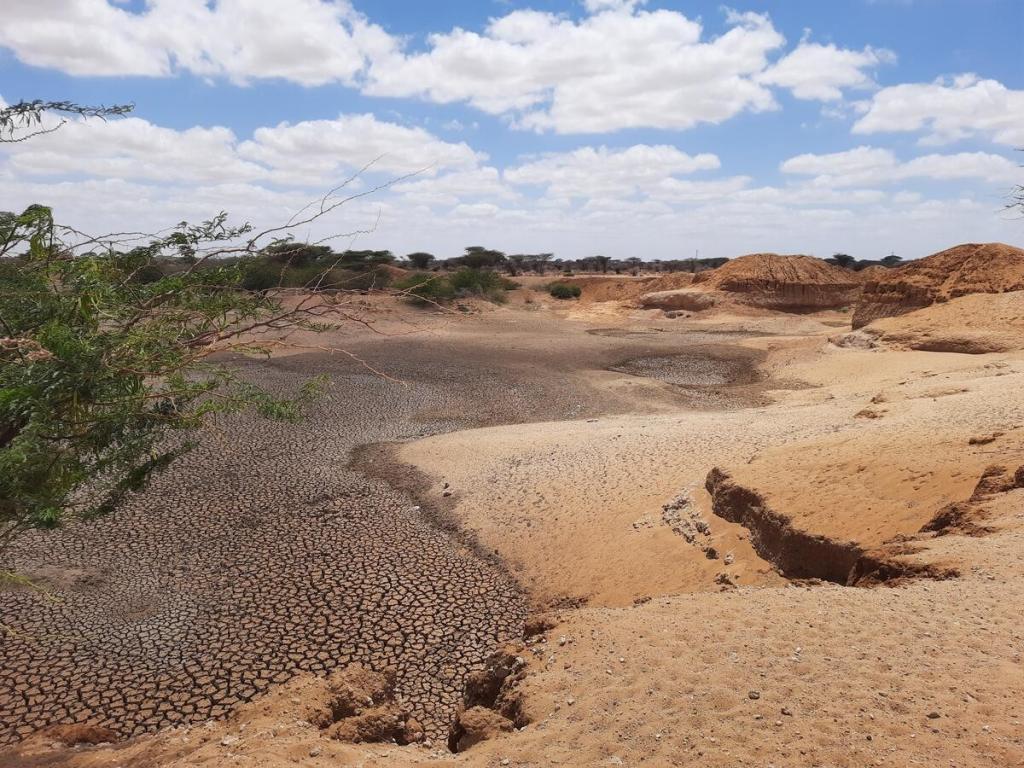
Photo caption: Degradation of soil and surrounding land due to human activities. (Photo credit: Dr Biswapati Mandal)
Soil is, therefore, the foundation of human civilization. Without it, our survival, and the majority of all terrestrial life is at stake. Further, soil is a non-renewable resource in our lifespan. It takes 30 to 1,000 years to form an inch layer through natural processes. It is therefore critical to care for the soil.
But soil is the most neglected part of our environment. Every five seconds globally, soil from land equivalent to a soccer pitch gets denuded! This equals about 36 billion tonnes of soil lost annually worldwide, and more than half of agricultural land severely spoilt. (1 billion tonne = 109 kg so 36 billion tonne = 36,00,00,00,000 kg of soil gone bad!)
The Food and Agriculture Organization of the UN recently reported that over a billion farmers around the world have suffered with poor crop yields due to land degradation caused by human activities! In India, the situation is worse. The extent of erosion here is quite high. About 70 per cent of the total land cultivated in our country is spoiled in one form or the other—basically, 122 out of 182 million hectares (1 million = 106)—causing an estimated loss of about 5 billion tonnes every year.
To salvage the situation, the Government of India has committed to rehabilitate soil by 2030 but that is for only 26 m ha of the degraded land. This is notwithstanding the gospel, “The nation that destroys its soil, destroys itself” by the famous US President Franklin D. Roosevelt in the 20th century.
Among the various spoilers, water-led erosion is predominant. This is conspicuous if you visit any river bank during monsoon. You’ll find muddy water flowing alongside the coast, which results from frequent landslides triggered due to cloudbursts. Owing to severe depletion and ruination, our soil’s capacity for resilience is under serious threat.
Low organic carbon content of our soils (mostly < 0.5 per cent) is another major reason for such deterioration. This organic carbon maintains the integrity of soil—keeps it living and helps it offer various ‘ecosystem services’ to us. However, improving Soil Organic Carbon (SOC) is a herculean task in India. That’s because our country is located under tropical, subtropical, arid and semi-arid climatic regions where a good amount of SOC gets oxidized. Just read that as a loss of SOC!
.jpg)
How does soil impact climate change and vice-versa?
Now-a-days we frequently hear of ‘climate change’. It is driven by long-term shifts in temperature, precipitation, and atmospheric conditions wherein we experience summers getting hotter, monsoons become erratic, and winters becoming colder than before. Unusually long dry spell and heavier rains, greatly disrupts our agricultural and food production activities.
The main reason for climate change is the increase in greenhouse gases (GHGs) in air such as carbon dioxide (CO2), methane, nitrous oxide, water vapour, and chlorofluorocarbons. Since the Industrial Revolution in the 18th century till now, CO2 levels have risen from about 270 parts per million (ppm) to more than 430 ppm—about 60 per cent rise in about 150 years! These GHGs trap heat in the atmosphere, making our planet warmer leading to uncertain and disturbed monsoons.
Can soil be a natural ally to mitigate this change for humans’ and others’ well-being? If yes, how?
Firstly, soil and climate change are no good cousins. They have a two-way relationship: climate change negatively impacts soil, while soil can either worsen or mitigate climate change depending on how we manage it. This is because soil is both a source and sink of carbon. It holds around 2,400 gigaton (1 gigaton = 1012 kg) of carbon in its belly. This amount is ~3 times higher than what is there in the entire atmosphere and 4.5 times of that in all vegetation on earth. Just imagine, if soil gets angry and releases its entire carbon into the atmosphere, what will be our fate! OMG.
Fortunately, not all soil carbon behaves alike. A good part of this carbon is sensitive to any disturbances caused to the soil while the other part is stubborn and stays stable. However, the sensitive part keeps the soil healthy for cropping while the stubborn part maintains Earth’s integrity.
Whenever there is any disturbance caused to the soil, like during farming, it causes the SOC to oxidize (resulting into GHG emissions). Thus, soil feels the carbon deficit perpetually. Therefore, any addition of carbon to it, causes the soil to hold it fondly. This balances the net loss and gain of SOC in soil and maintains the ‘carbon cycle’ in nature. But this yearning for carbon varies from one soil type to the other.
Carbon addition through cropping or any extra efforts, like crop residue, farmyard manure, compost, etc. could increase SOC. Selection of the right crop, the right cropping system, and the right soil could also enrich the carbon content. The right cropping system could mean leaving a good amount of plant roots hidden in the soil, and doing minimum tilling.
Carbon thus fixed in soil by right cropping is now called ‘carbon farming’. This keeps the soil healthy and productive, yielding more crops. Promoting this practice among farmers is the need of the hour.
However, improving the relationship between soil and climate change alone will not conserve soil. At an individual level, we need to change some societal behaviors like, improve dietary habits, shift towards plant-based protein, and reduce food wastage.
What could our young friends do to salvage the situation?
Following lines from Atharva Veda (around 900 BC) capture the message of this story.
Upon this handful of soil, our survival depends.
Husband it and it will grow—our food, fiber, and fuel—and surround us with beauty.
Abuse it, the soil will degrade and collapse, taking mankind with it.

Former Pro Vice Chancellor of the Bidhan Chandra Krishi Viswavidyalaya, Kalyani, Nadia district, West Bengal.

Assistant Professor, GD Goenka University, Gurugram, Haryana

Principal Scientist at ICAR-Central Soil Salinity Research Institute, Regional Research Station, Canning Town, West Bengal.

Illustrator, Art & Design, Centre for Science and Environment, New Delhi.