


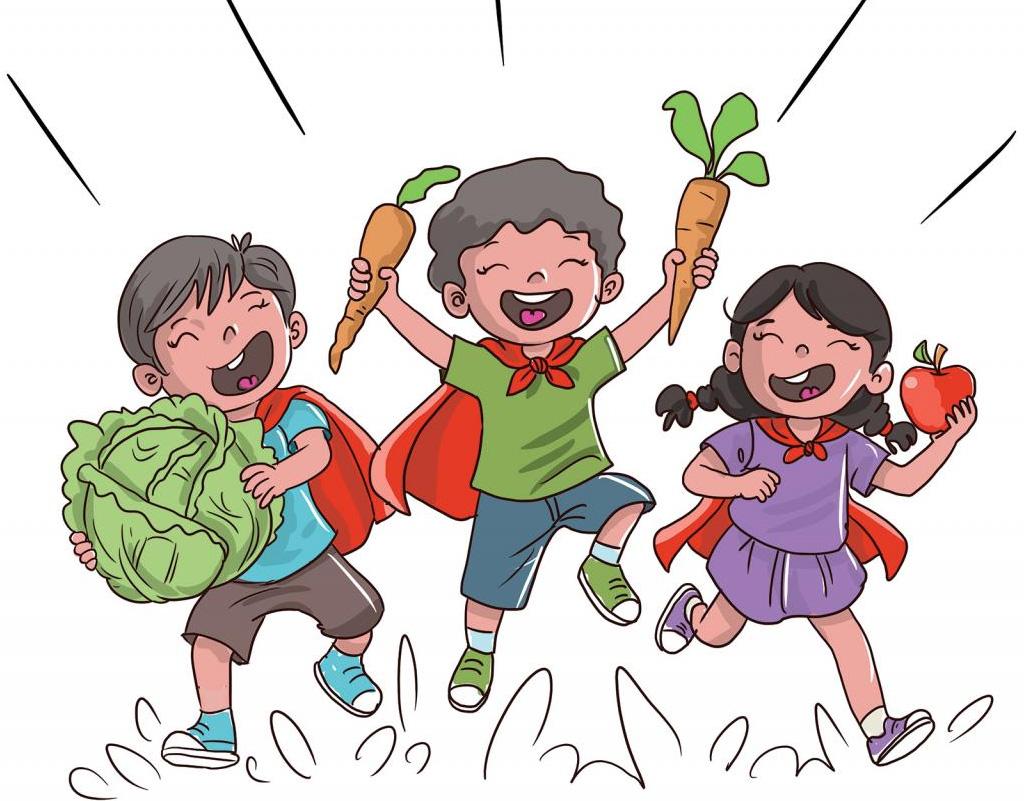
Discover why nutrition is more than just ‘food’—it shapes children’s health, learning, and future
I was born in a small village called Alakurapadu in Prakasam district of Andhra Pradesh. Life there was slow and simple. Evenings smelled of wood-fired cooking, and most of the food we ate was grown right at home. Poultry and buffaloes were part of our family, and vegetables came fresh from the fields. I studied in government residential schools, where there were strict rules about diet and physical activities, like compulsory daily exercises and outdoor games. That is where I discovered two things: I loved learning new things and eating tasty food. And to me, ‘good food’ meant anything not made at home or in the hostel: fast food, packets of snacks, and fizzy drinks. They felt exciting and special.
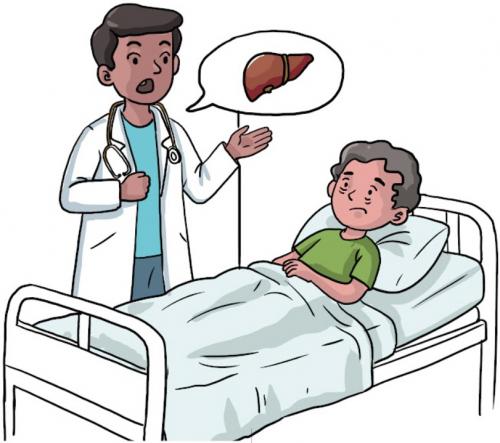
After school, I went to Pondicherry University. Once in college, there were no limits to what I could eat. I stopped playing sports and kept eating all the things I liked. One morning, I woke up with a sharp pain in the right side of my body. The doctor told me that I had fatty liver Grade-I. Now, that was the first time I truly understood the word ‘nutrition’. He explained that my body needed many kinds of food: fruits, vegetables, eggs, and plenty of regular exercise too. These were lacking in the food items I feasted on.
During my Gandhi Fellowship in Bihar, where I worked closely with government schools, I observed children being given iron and folic acid supplements, just like pregnant women, to overcome deficiencies along with their mid-day meal.
My next big learning came during COVID-19. The world had paused and suddenly everyone was thinking about their health. I saw the people I knew struggle because of illnesses they already had. Those who depended mainly on medicines found it harder to recover compared to those who regularly ate diverse, nutritious foods. That was when I realized how many people did not understand that food and nutrition must go together.
Through my travels with the 52 Parindey Fellowship, I also saw how the way we grow, handle, and eat our food is changing and how these changes are shaping life on Earth.
In 2022, I joined WASSAN and began contributing towards nutrition-sensitive food systems. As I continue this journey, I learn something new every day about food, farming, and keeping our bodies healthy. And I hope children everywhere learn these lessons much earlier than I did.
Nutrition affects our growth, like health, height, weight, etc. You might have noticed that many children in our country appear too skinny, too short, or too weak. To know how we can serve them right, it is important to measure their nutritional intake.
The Anganwadis use a system called Poshan Tracker to regularly measure children’s height and weight in rural areas.This helps them spot malnutrition quickly so they can help these children early.
Real-Life Challenge: Enough food but not nutrition!
Even though a lot of children are measured, many still suffer from malnutrition. They don’t get a nutritious diet — sometimes only a plate of food, not the right kinds of food.
Nutrition-sensitive food means including food that is important for their growth like millets, veggies, eggs, so you guys can get what you really need!
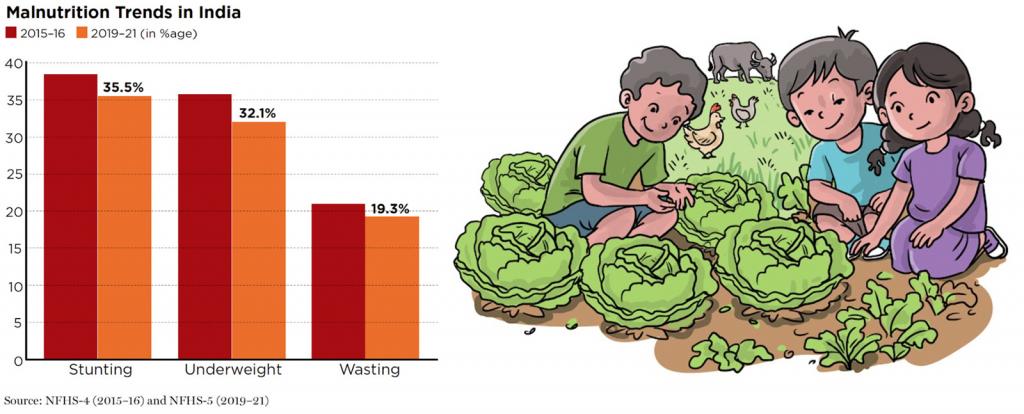
Look at the bar chart and understand what Stunting, Underweight, and Wasting are.
These three parameters tell us about malnutrition, which remains a serious challenge in our country. The National Family Health Survey (NFHS)—a large, nationwide health and nutrition survey—tracks population health trends in our country every few years. It is conducted by the Union Ministry of Health and Family Welfare.
As per the latest NFHS-5 (based in 2019–21), among the 0–5 year old children, about 35.5 per cent are stunted, 32.1 per cent are underweight, and 19.3 per cent are wasted across India.
To give you a better idea, the 35.5 per cent of stunted children are over 3 crore in number (as per the State of Food Security and Nutrition in the World 2025 report). Meghalaya, Bihar and Uttar Pradesh report the highest stunting, while Puducherry, Sikkim and Andaman & Nicobar Islands perform the best. Recent Poshan Tracker data (2025) shows that more than fifty per cent of the children are stunted in 63 districts of India with some tribal ones recording over 65 per cent.
Malnutrition is generally higher in rural and tribal areas. Boys show slightly higher wasting, while girls show marginally higher stunting. Despite government schemes like ICDS and Mid-Day Meals, chronic undernutrition persists. This highlights the need for food diversity, increased nutrition among mothers, sanitation, and community-driven steps.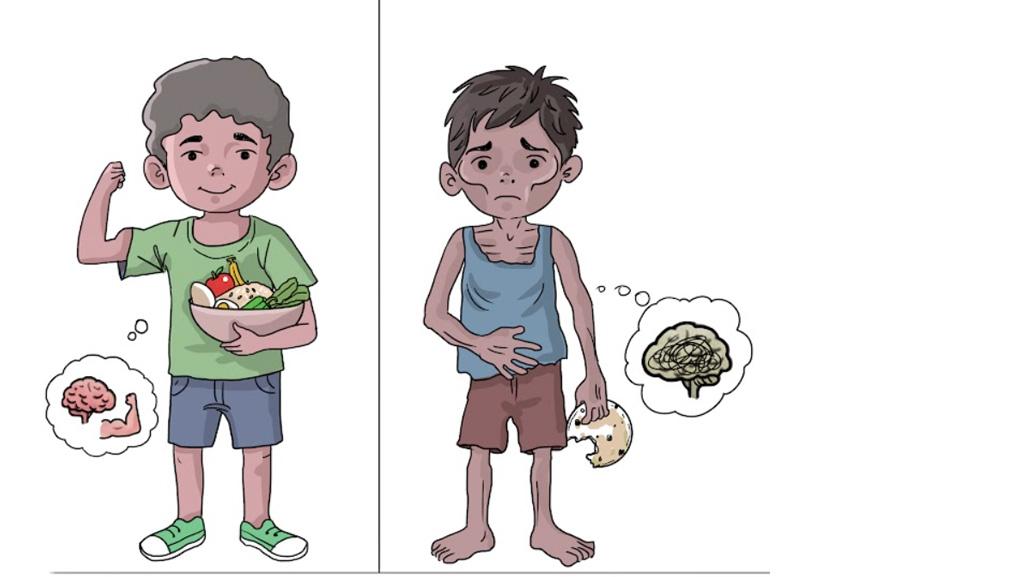
The latest real-time (December 2025), Anganwadi data for 0–6 year old children from Poshan Tracker — highlight the continued burden of stunting (33.5%), underweight (14.4%), and wasting (~5.0%) in our country. Compared with the previous chart, you will note improvement over time across all three parameters. This is despite the fact that the Poshan Tracker includes older children (under-6), in whom undernutrition naturally accumulates. Note that NFHS includes data only for under-5 children.
When I began working on nutrition, I realized something very important: supplementary nutrition alone cannot solve malnutrition. It is like putting a band aid over a deep wound.
Many government schemes try their best to push Anganwadis to provide take-home rations; schools offer mid-day meals; and health workers give medicines, deworming tablets, and conduct growth checks. These are all necessary, but they do not always reach the root causes of poor nutrition.
Children may eat one good meal at school, but if the food at home is not diverse—if there are no vegetables, fruits, pulses, eggs, or clean water—they remain weak. Medicines can treat illness, but only the right food can build strength that lasts a lifetime. I slowly understood that childhood nutrition shapes the future of every child: their brain growth, immunity, confidence, and even how well they learn in school.
This is why, at WASSAN, our work goes beyond giving food; it focuses on changing the way families choose, eat, and grow food. We work in ‘Malnutrition-Free Gram Panchayats,’ where communities take responsibility for what goes into their fields and what comes onto their plates. One of the strongest parts of this effort is our group of Poshana Vanithas, local women trained as nutrition advocates. They visit homes, teach cooking with local ingredients, and explain why diverse meals matter.
They also help farmers grow different foods: uncultivated greens, millets, desi rice, pulses, and chemical-free vegetables. Many of these women have even started small enterprises, selling these nutritious foods in local markets. In this way, nutrition becomes not just a programme, but a community movement growing in the fields, shared in the homes, and reflected in the health of every child.
So, will you make sure to eat all the different kinds of food next time?
This article received inputs from Anubhuti Sharma, Senior Reporter-cum-Sub Editor, Young Environmentalist Programme, Centre for Science and Environment.
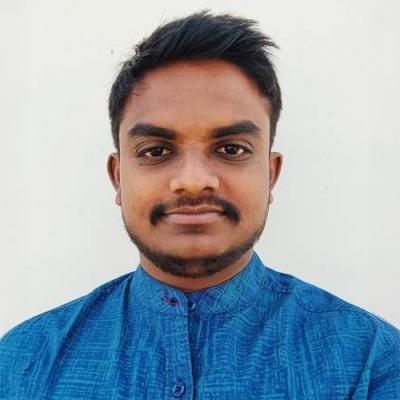
Program Officer, Watershed Support Services and Activities Network, Hyderabad, Telangana

Illustrator, Art & Design, Centre for Science and Environment, New Delhi.