


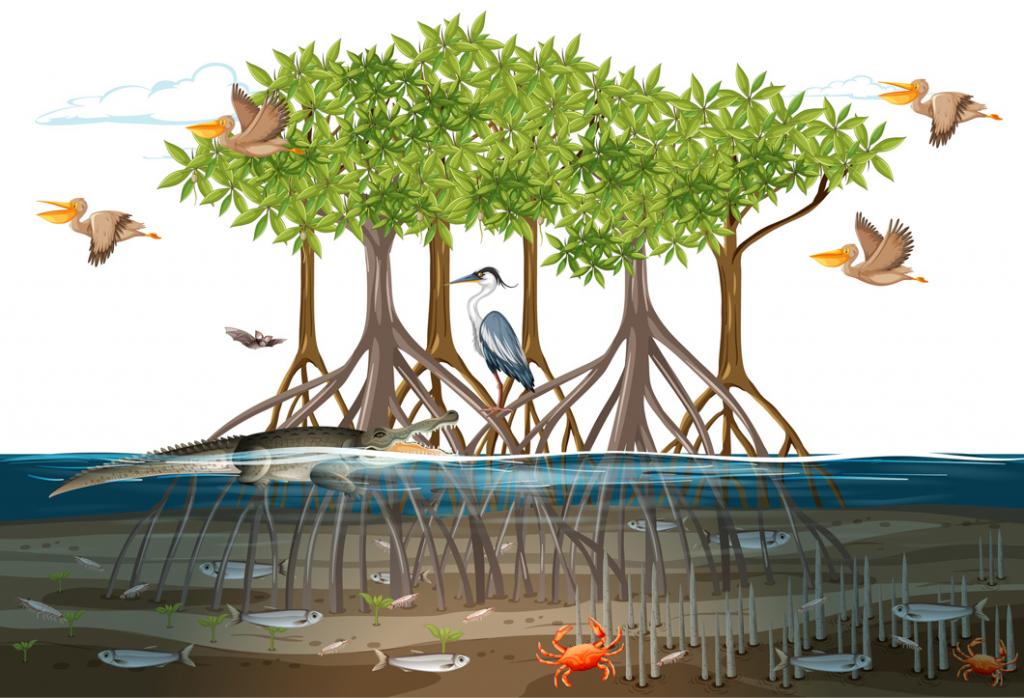
These salt-loving trees safeguard shores, store carbon, and sustain countless species—helping balance ecosystems and fight climate change
Mangroves are a unique group of plant species that grow along coasts, particularly in muddy, marshy, and waterlogged zones that are often submerged by tidal seawater. In various local dialects, mangroves are also referred to as tattavruksha, kund, or kandalvan. Globally, around 73 species of mangroves have been identified, out of which 46 are found in India. Major species include Tatawar, Champa, Fugni (Murchi), Surkandal, Kandal, Sood, Meswak, and Marindi.
Their dense green foliage and intricate root systems provide critical habitats for a wide variety of organisms, including birds, insects, and aquatic animals. Mangrove areas are especially important for the breeding of fish, crabs, molluscs, and prawns. Their web-like roots act as natural shelters and breeding grounds, making these ecosystems hotspots for biodiversity.
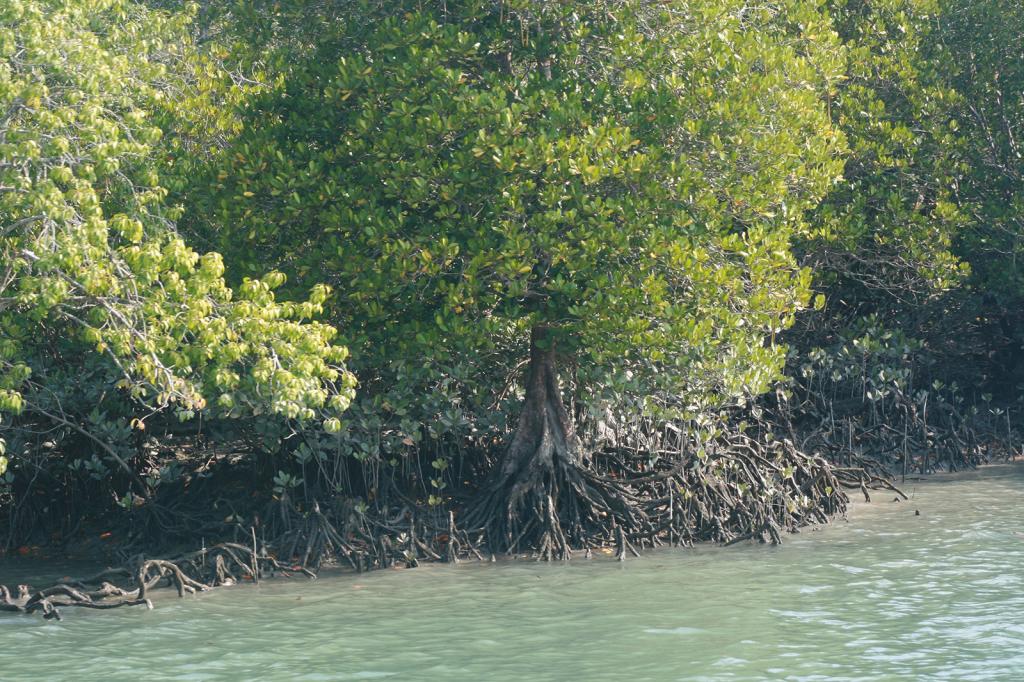
Photo credits: CSE Archives — Mangroves in the Sundarbans, West Bengal
Mangroves thrive in oxygen-poor soils due to their specialised respiratory roots known as pneumatophores. These roots grow above the ground and directly absorb oxygen from the air, enabling respiration even in anaerobic conditions. The presence of aerenchyma tissues in these roots facilitates rapid exchange of gases. The outer surfaces of these roots contain structures called lenticels, through which oxygen enters the plant's internal system. These adaptations allow mangroves to survive effectively in highly saline and oxygen-deficient environments.
Mangroves also hold religious and historical significance. For instance, in Chidambaram near Chennai, a mangrove tree is worshipped as the sacred Sthala Vriksha at the Nataraja Temple. In West Bengal’s Sundarbans, the deity Bonbibi is revered as the protector of mangroves. The Sundarbans, one of the world’s largest mangrove forests, is declared a UNESCO World Heritage Site due to its ecological and cultural importance.
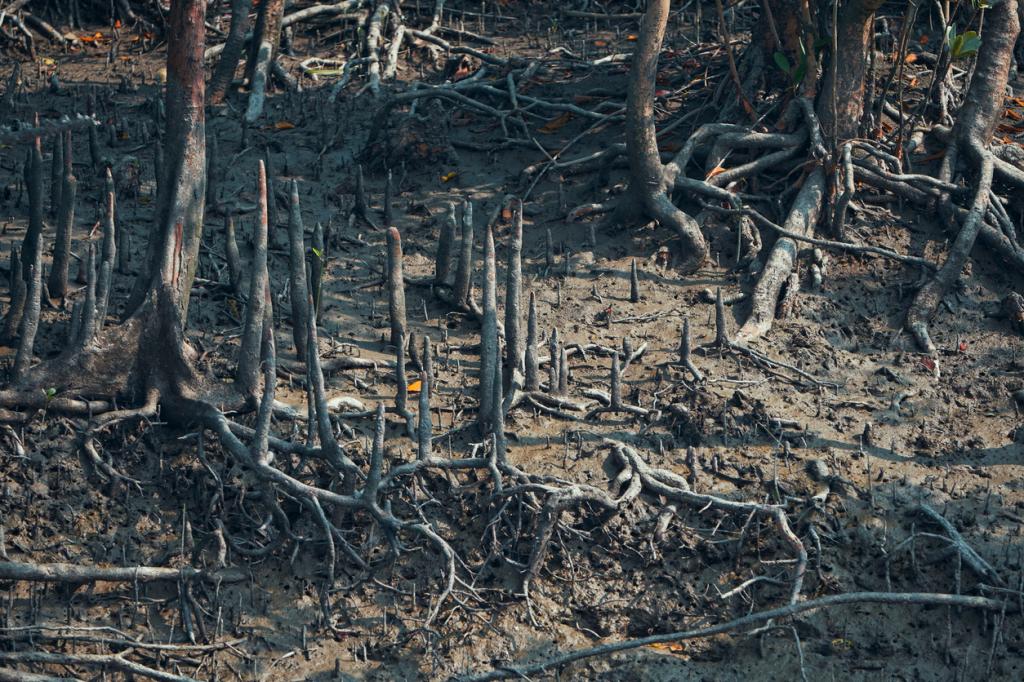
Photo credits: Pneumatophores of mangroves help roots breathe in waterlogged, oxygen-poor, saline soils.
The International Union for Conservation of Nature has classified many mangrove species as threatened. For example, Avicennia marina, Avicennia officinalis, and Sonneratia apetala are found in significant numbers around urban regions like Thane and Vashi. However, they are now classified as Endangered and Critically Endangered.
Today, rapid urbanisation, increasing population, and widespread concretisation are major threats to mangrove habitats. This loss poses serious risks to biodiversity, climate resilience, and flood control.
Several legal frameworks have been established to protect mangroves. These include the Environment Protection Act (1986), Coastal Regulation Zone Notification (2011), Maharashtra Tree Felling Regulation Act (1975), Water Pollution Control Act (1974), and Wildlife Protection Act (1972). The Maharashtra government has developed dedicated coastal management plans and formed a special Mangrove Cell to oversee conservation efforts. Acknowledging their significance, the Union Ministry of Environment has given mangroves the status of “Highly Important Plants” and integrated their protection into national laws. To raise awareness, ‘International Mangrove Day’ is celebrated globally on July 26, highlighting the critical role mangroves play in sustaining life and protecting coastal environments.

Sr. Project Technical Assistant, Environmental Science & Engineering Department, Indian Institute of Technology Bombay, Mumbai, Maharashtra.