


 Moulds—the ugliest, least-known, and most ignored—are the most versatile, indispensable, and critical aspects of our living world. Here’s an encylopaedic summary to unravel and unlearn all about them.
Author: Shrey Gupta
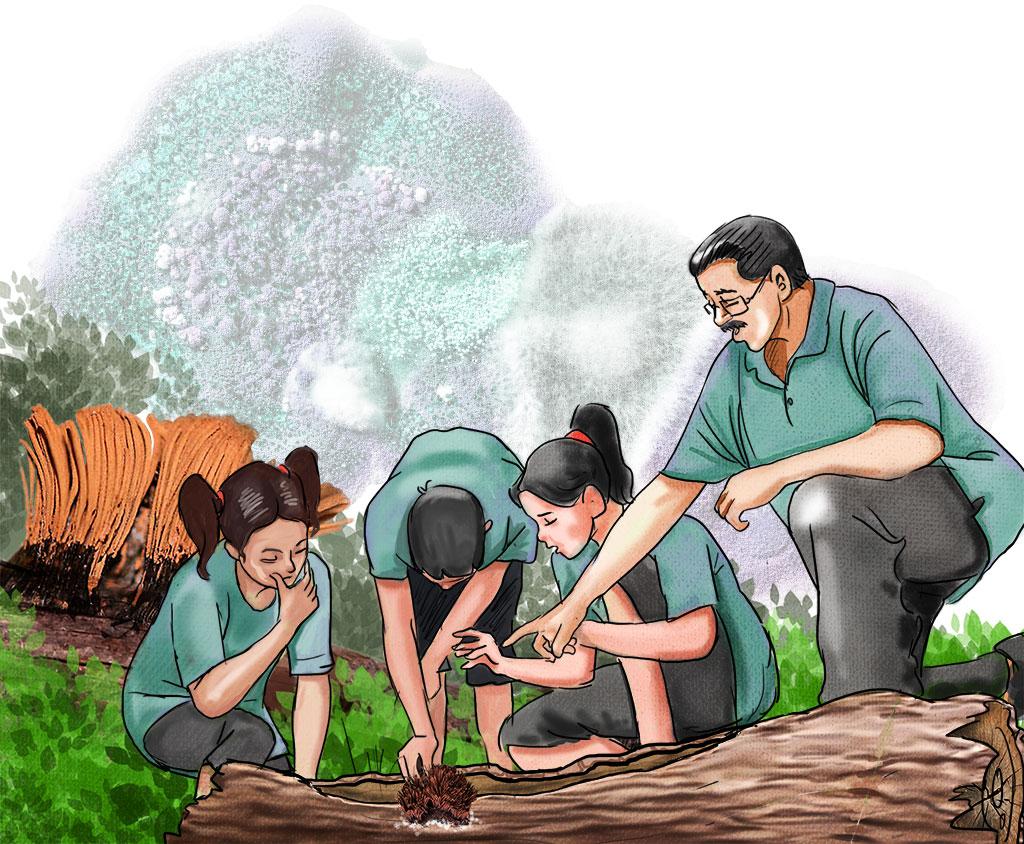
Did you know that monsoon is the best time to explore the amazing world of fungi? And, I love studying mushrooms with everyone in this season. In fact, last month, a group of children and I had a great time searching for a variety of mushrooms in a park.
One of my students, named Sunita, had spot something fascinating on a wooden bench. She looked very thrilled and confused. So she curiously reached out to me and pointed to a weird brown-coloured mushroom. On observing it, I realised that this was something exceptional. It was a fungi indeed, but not a mushroom. In fact, it was a mould called ‘Chocolate tube slime.’ I recollected that it grows quite commonly on wood in natural habitats. So obviously, Sunita was bustling with lots of questions: “How did this mould grow on this bench? Isn't it supposed to grow on rotten foods only? What is it feeding on here? Should we get rid of it as moulds are harmful to us? ...”
I’m sure you guys are also inquisitive like Sunita. So, let me demystify the world of moulds for you.
What’s in a mould?
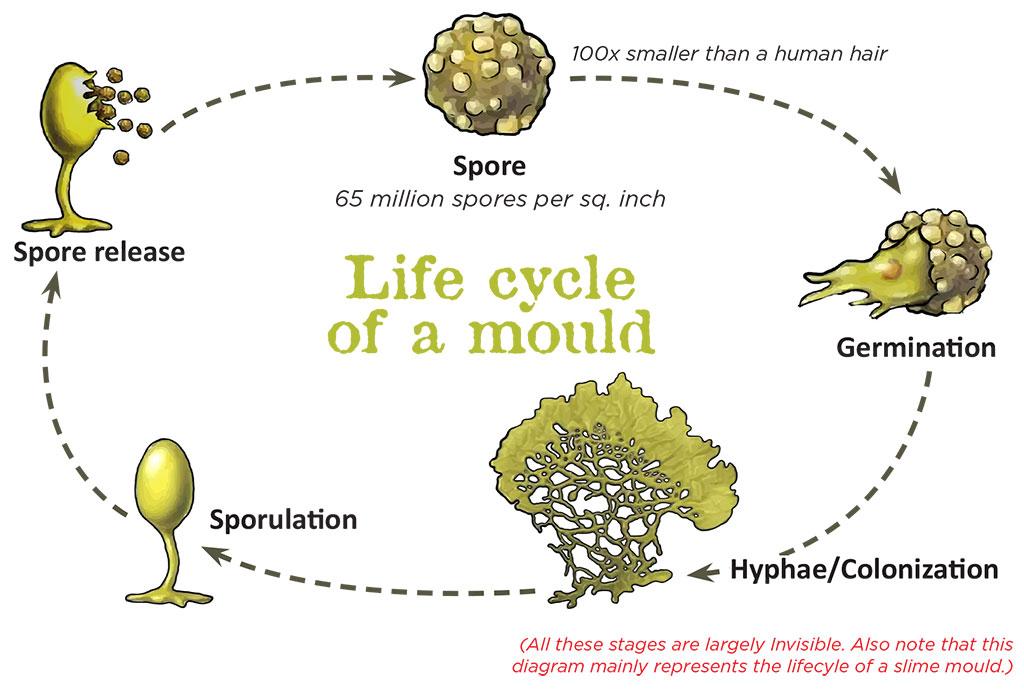
Moulds are a type of fungi. They are neither plants nor animals. They are found everywhere on Earth except underwater. They multiply through invisible spores, which can live for a long time without germinating. They are even present in the air we breathe. And most of them are harmless to us. These spores only germinate when they are wet. Once moist, they can germinate on any kind of surface from the walls of our bathroom to the foods in our kitchen. During germination, their spores give rise to tiny threads called hyphae.
Have you noticed the furry, cottony growth on very old pieces of bread, tomato, or an expired food item? Well, those, often awful-looking things, are the hyphae of moulds, spreading and thriving on our foodstuffs. Once their moisture dries out, they magically disappear too. But, it’s not the end of their life! By now, they’ve already released their spores, so they can grow again anywhere, as soon as they find enough moisture.
The Good, Bad, and Ugly Moulds!
Moulds are unpopular for their disgusting looks. But, actually, they come in more colours than those making a rainbow. Some common shades include tones of green, blue, orange, yellow, red, pink, purple, brown, black, and white. In fact, they are so colourful that they are used as dyes in the fashion industry. Like, Aspergillus provides black colour to our fabric. Trichoderma offers multiple colours from green to yellow-green and is extensively used for dying silk cloth.
But, you know, moulds cannot be identified by their colour. Two moulds of the same kind can have different colours depending upon their age. Plus, their colour is also influenced by the surface on which they are growing, their moisture levels, intensity of light around, and climatic conditions.
Slimy Moulds!
Moulds are so bewildering that there’s even a variety called, ‘Slime moulds’, which are neither classified as plants nor animals nor even fungi! They grow in cool, dark places across the world, mostly in woodlands and forest floors. They crawl on deadwood, steering clear of predators and searching for food. They feed upon a variety of organic matter, like dead plants and animals, bacteria, yeast, and fungi. Like all other moulds, they decompose, process nutrients and return them to the soil. Thus helping the forests big time in recycling waste and replenishing their energy. Yet, little is known about these mysterious beings!
Why Not ‘Yuck’ about Moulds?
There are more than 1,00,000 varieties of moulds in nature. Out of these, only five are commonly found indoors. And these are the only ones which can pose a threat to us, that too, if they grow on moist surfaces inside our houses, especially, when our immunity is low. That’s why it is advised that we keep our surroundings neat and clean, and eat fresh food only.
So, if I have to answer: ‘Are moulds harmful to us?’ I will say, definitely not as even the once that are so, are hardly a few. Rather, moulds, overall, are very good and important for the health of our environment. They help in sustaining life on Earth. They are among the primary decomposers on our planet. That’s why, just as all other fungi, they're nicknamed, ‘the garbage cleaners of nature.’ Without them, and other fungi, every living thing on land—including plants, animals, and humans—would die within months. No dead bodies, animal matter or leaf litter, will decompose. No nutrients will be recycled in the soil. And no new plant life will grow or dependant animal life will thrive thereafter. So, ultimately, once we die, our bodies will not rot—all of us would just become a pile of dead matter with no new life restarting from there on! Life on earth will come to a standstill.
Moulds Help Us Big Time
I’ve already told you earlier how moulds are useful in the textile industry. Similarly, in the pharmaceutical industry, they provide us with many medicines. Antibiotics derived from moulds, cure a wide range of infections in humans and animals. Penicillin is the most common example. It is the first antibiotic to be discovered!
Further, moulds help us in food preservation. All citrus fruits contain a natural acid called the citric acid. This increases the shelf life of cold drinks, fruit beverages, and candies that we routinely consume. But, it is not possible for industries to meet the demand of citric acid by extracting it solely from fruits. So, they use a black mould called Aspergillus to produce the citric acid.
Moulds also add flavour and nutrition to our food. Different tribes around the world use them for brewing liquor and fermenting bread, tofu, soy sauce, and flavoured cheese. Fermentation with moulds increases the digestibility of foods and also adds a sweet and sour taste to them.
Moulds are more widespread today than 50 years ago!
Over the past decades, our planet has been undergoing an adverse climate change. This is increasing the dampness and moisture inside our buildings. Since moulds thrive in such warm and moist conditions, the increasing global warming can ease the pathogenic moulds to reproduce, and become more resilient and common inside our houses. If that happens, some moulds like Aspergillus and Fusarium can become a global concern to our health. We would witness more people suffering from flu, fever, itchy eyes, runny nose, skin allergies, lung and skin infections, pneumonia, and asthma. So, be proactive about mitigating the climate crisis, and better keep your room spick and span!
The author is an environmental microbiologist and co-founder of the Eco Vigyan Foundation in Shimla, a not-for-profit promoting learning-from-nature and sustainable living in schools.
Supplement Editor: Souparno Banerjee Senior Creative Director: Ajit Bajaj Copy: Anubhuti Sharma Design: Ritika Bohra
Illustrations: Yogendra Anand Cover Design: Ritika Bohra, Yogendra Anand Production: Rakesh Srivastava, Surender SIngh
Email: young@downtoearth.org.in Snail Mail: 41, Tughlakabad Institutional Area, New Delhi–110062