


Stories of Chipko, water warriors, indigenous movements, and scientists who shaped India’s unique environmentalism.
“In India, environmentalism as I define it was made possible only after the subcontinent came under the control of British imperialists. Colonialism constituted an ecological watershed, in that it brought with it new technologies of controlling, manipulating, reshaping and destroying nature. In pre-British times, the state had occasionally participated in natural resource management…under the British the state became a far more active player in human-nature interactions.”
Ramachandra Guha, “Speaking with Nature”
Environment. Environmentalism. Environmentalist. For India these words have a different meaning. For, India is an ecological being – from the economy to people's sustenance to her political life, environment or the ecology is the most defining, and dependence factor. Agriculture still sustains close to 50 per cent of India’s population; forests are a source of livelihood for close to 20 per cent of the population; and livestock dependent on natural grazing earns the most for a rural Indian. Our modern economy critically depends on natural resources like minerals. So, being an Indian is the same as belonging to the environment, feeling environmentalism, and fighting like an environmentalist to protect our very existence.
In such a scenario, one would be tempted to explore the nation’s many environmental fights, and the environmentalists who steer those. As Ramachandra Guha, the historian, who has been quoted above said, our natural resources also attracted colonisation. And most of our environmental movements and environmentalists, by default, have fought against this very exploitation, and in essence, their movements have been to reclaim the critical link between us and our environment.
Why are we remembering this now? In January 2026, Madhav Dhananjaya Gadgil died. He was an ecologist who waged many battles for environmental protection. His death brings to notice our country’s environmentalists who impacted our environmental movements. And more importantly, to understand through their movements, the spirit of ‘Indian environmentalism.’
A scientist who made sociology and ecology as the axis.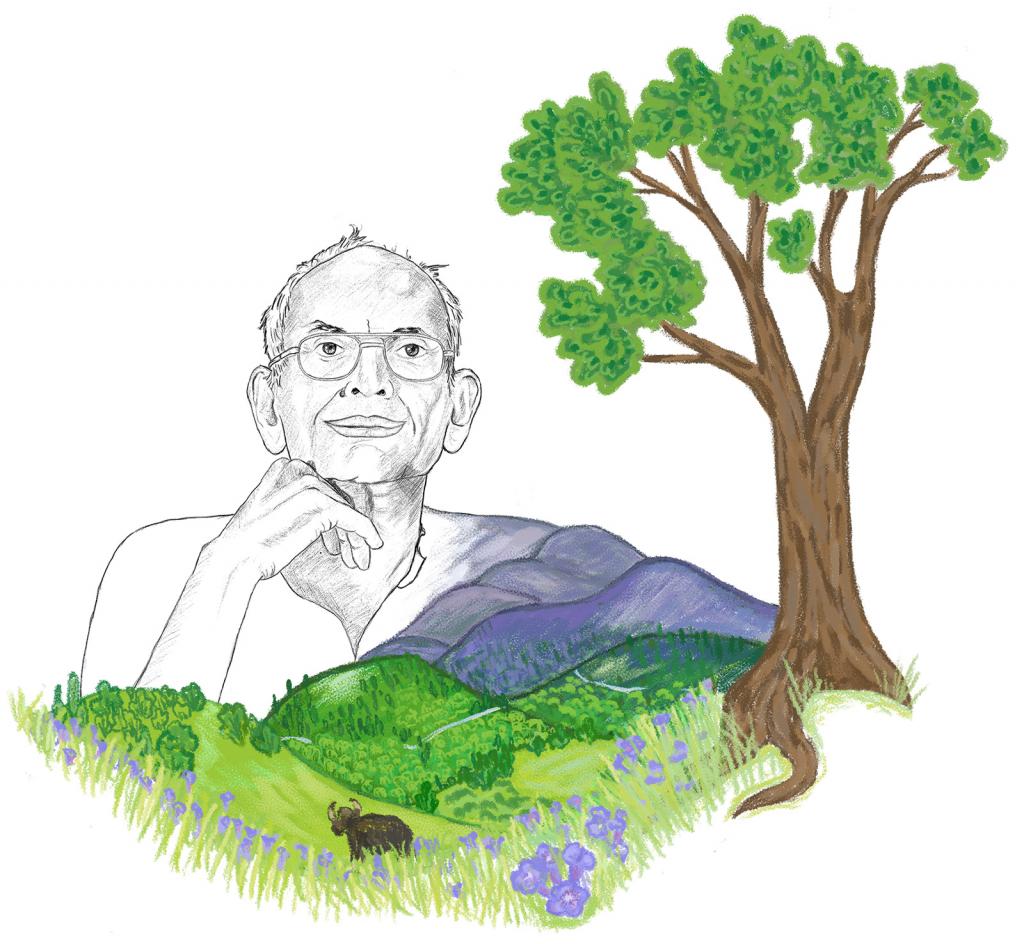
Madhav Gadgil is widely known for the protection of the Western Ghats. His rigorous evaluation and research in the 1980s led to the Nilgiris being identified as the country’s first biosphere reserve. In 2011, the Western Ghats Ecology Expert Panel of which he was the chairman, recommended the declaration and protection of around 64 per cent of the Western Ghats region as an Ecologically Sensitive Area.
Gadgil’s environmentalism was deeply rooted in the local social and ecological realities. In other words, he considered environmental protection not as a purely individual endeavour but involving the local communities to achieve sustainable results. He applied this principle of conservation while shaping the Biological Diversity Act of 2002. He was instrumental in creating the People’s Biodiversity Register under this Act. These registers record the biological wealth and traditional knowledge of this region that the local communities have. And this gives them the legal rights over the use and benefit-sharing of their resources.
He always believed that nature conservation can’t be achieved through laws only. Rather, he used to say that given the reality of India, the communities must be involved and made part of it. That's why he championed the role of Gram Sabha (village council) in various conservation programmes.
The link between environment and economy have shaped India’s most iconic environmental movements.
The Chipko movement of the 1970s is the most widely recognised environmental movement in India. The people who steered it are thus the key environmentalists India should remember. Who are they?
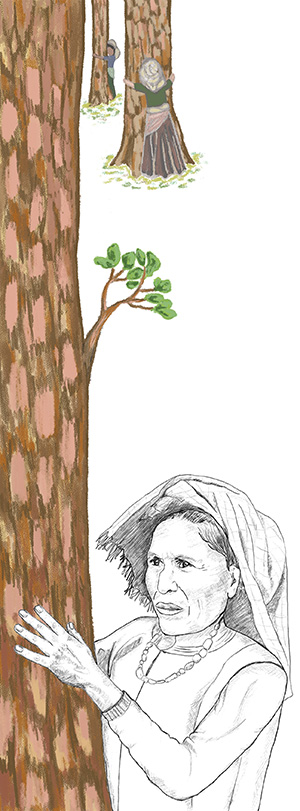
The many women of the Himalayan villages of Reni and Mandal in Uttarakhand. Chipko means to hug, and these women literally did that when commercial loggers came to take away their forests. When the contractor and labourers arrived to cut the forest of Reni village in the morning of March 1973, there was no man present in the village.
Under the leadership of the Mahila Mangal Dal President, Gaura Devi, the women from Reni dashed towards the forests to their rescue.
They hugged the trees and didn’t let them be chopped. This act was not triggered due to what we would normally believe: a women’s movement. They asserted the local community’s rights over local resources because the forests sustained their daily life.
It is the poor villagers who suffer the most when the fragile ecology degrades. And the Chipko movement pointed precisely that.
Chandi Prasad Bhatt, who led the Chipko and is regarded as a pioneering environmentalist, said, “The Chipko movement was not only about saving trees. It was also a movement for the rights of the local people on the forest wealth. We were explaining to the government that green trees should not be cut at all.
Even if dry trees had to be cut, we, the local people, should use them. This was the root of this movement. If the local people have rights over the forest wealth, migration from the mountains can be stopped.”
Reviving traditional water-harvesting wisdom to tide over acute water scarcity.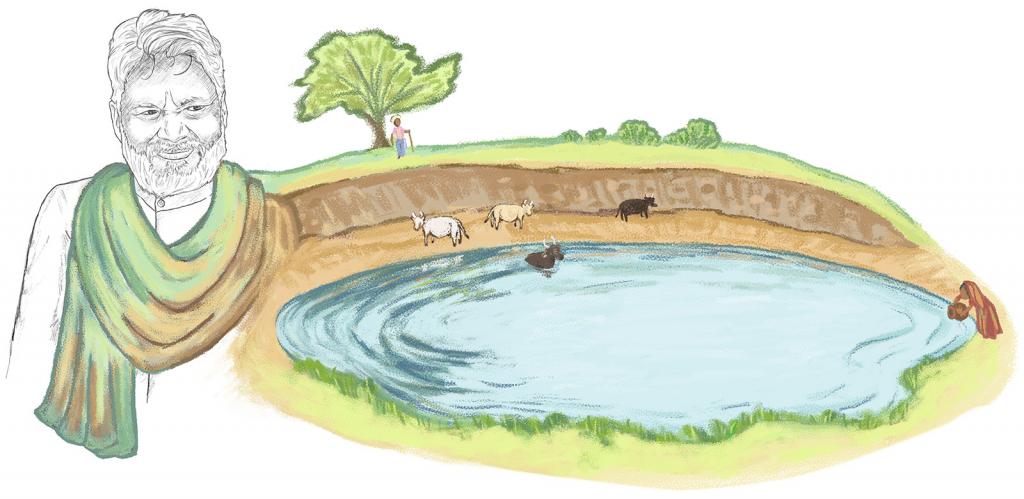
Rajendra Singh, the founder of the non-profit Tarun Bharat Sangh based in Bhikampura in Alwar, Rajasthan, famously said that India’s desert has more water than any other cities in India. He claimed this on the basis of our ancient wisdom to harvest rainwater and how it sustains the Thar, the world’s most densely populated desert.
He has been working with various villages to revive their traditional water harvesting structures and transform them from water-deficient to water-surplus regions. When he started in Alwar in 1985, he just had one village to work with—to revive its traditional water harvesting system called Johad. After 40 years, he has revived nearly 9,000 Johads in over 1,000 villages across Rajasthan.
He pursues the principle of involving the local community who have been living in these places for generations and developed their own ways of harvesting rainwater. Reviving the traditional systems has regenerated five rivers, which have led to a boom in farming. “India’s communities are great environmentalists. Because they survive on the environment,” he believes.
For the indigenous communities, belief is ecological.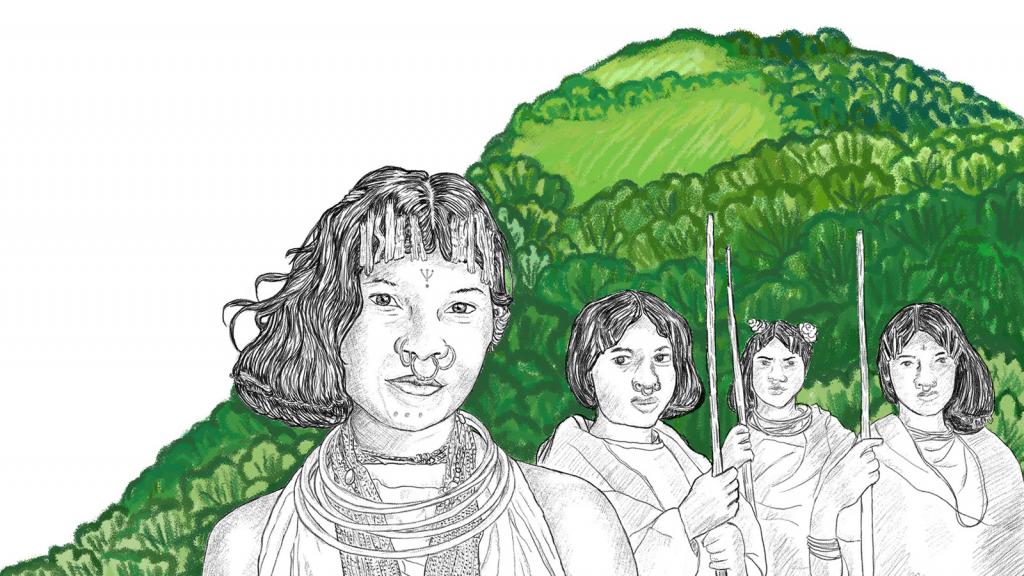
In 2013, the Dongoria Kondhs of Odisha’s Rayagada district won a historic battle in the Supreme Court of India. They had been protesting against bauxite mining in their habitats, a rich ecosystem critical to their livelihood. In April 2013, the apex court ordered the government to seek fresh consent for mining from the Gram Sabhas (village councils). The court based its judgement on a constitutional provision. It said, “Religious freedom guaranteed to scheduled tribes and forest dwellers under Articles 25 and 26 of the Constitution is intended to be a guide to a community of life and social demands. The above mentioned Articles guarantee them the right to practice and propagate not only matters of faith or belief, but all those rituals and observations which are regarded as integral part of their religion. Their right to worship the deity Niyam-Raja has, therefore, to be protected and preserved.”
The apex court upheld two major constitutional rights here: the right of the tribes to lead their own way of life and the right of the village councils to decide on matters that impact their lives.
Soon, the government had to ask permission for mining from twelve Gram Sabhas who ultimately rejected it. The indigenous people present in these sabhas opposed mining arguing that, “the Niyam Raja or ‘King of Law’ that resides at the hilltop… is interconnected with their identity, culture and interests.” This movement is therefore celebrated as the country’s first environmental referendum. And, collectively defines what environmentalism in India is and who the environmentalists protecting it are.

Managing Editor, Down to Earth

Sub-editor for Children’s Books, Centre for Science and Environment, New Delhi