


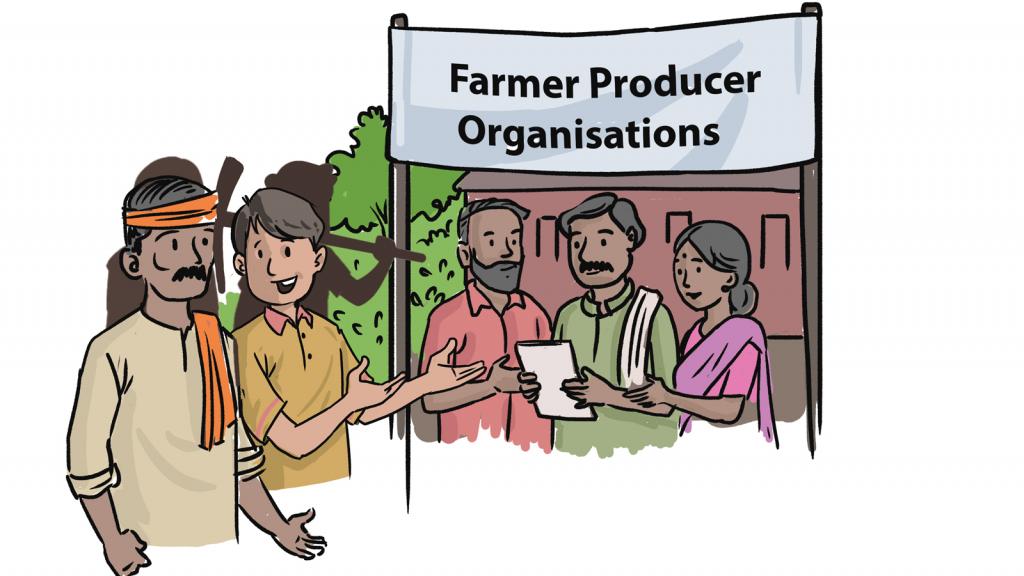
The story of how Farmer Producer Organisations are helping farmers tackle the challenges of the market, climate change, and deteriorating ecology.
You may have heard the quote ‘Once in your life you need a doctor, a lawyer, a policeman, and a preacher but every day, three times a day, you need a farmer.’ After all, if it weren’t for the hard work of farmers, we wouldn’t have all the tasty and diverse food we eat every single day. We owe our ‘food security’—the assurance of enough healthy food for all of us in the present and future years—to farmers. What would happen if farmers were to disappear from our lives?
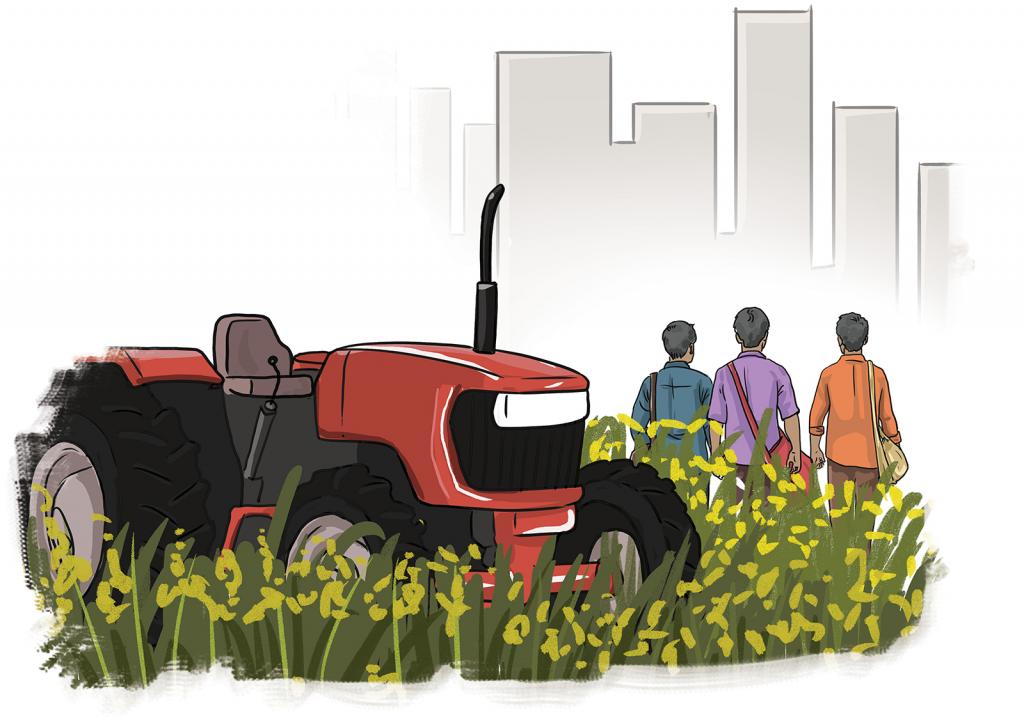
For the longest time in India, this would never have been a question, as agriculture has always been the country’s largest source of employment. But here’s the worrisome truth. Over the past four decades, farmers—the very people we need the most in our everyday lives—have been abandoning their homes, fields, and farming, in hordes to leave for cities. A recent report (State of Working India 2026 by Azim Premji University, Bengaluru) shows that, over the past forty years, the population of young men employed in farming has shot down from ~57 to 37 per cent! I come from that part of India, Keralam, where this exodus from farming is the fastest and near complete.
So why are people leaving farming? One of the biggest reasons is that farming simply does not make enough money today! People leaving rural jobs, mainly farming, is known to be a common trend in a growing economy like India’s, as most of the country’s money and resources are pulled away to feed expanding industries and urban economies. However, this shift has a worrisome effect on our social systems, ecology and ultimately, our food security. Yikes! Can you imagine having no food on your plate, because there were no more farmers to grow the food?!
To prevent such a crisis, the government of India decided in the early 2000s, that it must find a way to bring farmers and other related people (like fisherfolk, cattle farmers, shepherds, etc.) together as a collective body, to make these professions more profitable. The Dr Y.K. Alagh committee that was set up by the government then came up with a new type of farmer collective called Farmer Producer Organisations (FPOs) that could be created by a group of 10 or more farmers.
You may have heard of cooperatives such as Amul (think of all the yummy cheese and butter we eat) that existed long before this. FPOs continued to carry the democratic model of shares and decision-making of such cooperatives—a single vote for each member. However, they were different from cooperatives as they also held the legal status of private businesses. Meaning, farmers can come together and set up a private business of their own.
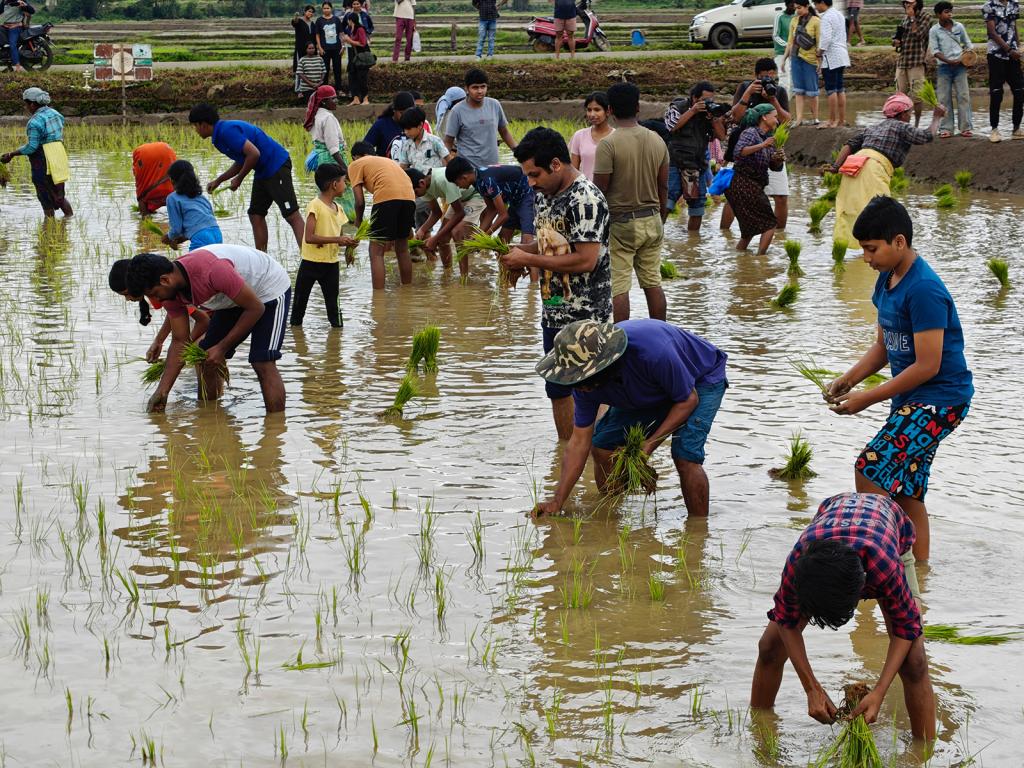
Kambalanatti is a traditional paddy transplanting festival celebrated in the Wayanad district of Kerala, India, where the entire community—including men, women, and children—join together to plant rice.
In 2003, the Company laws that govern private businesses were updated to create space for such people like farmers, fisher folk, weavers, non-timber forest produce collectors to form collective companies. These were generally called Farmer Producer Companies (FPCs). For farmers, this was a crucial step towards working in the markets easily, something which had always been a challenge for them.
In 2013, our government came up with some policy rules on how FPOs should be made and run. These included open membership for everyone without discrimination and one vote for every member. Every member contributes money to run the FPO (like you may collect funds for your neighbourhood eco-club). FPOs are also supposed to function independently (without anyone poking their nose from outside). There is also focus on farmer education, training, and sharing information on things like cool farming techniques. The rules encourage cooperation among FPOs and last but most importantly, promote ‘sustainable development’ through FPOs. (Look up what it means!)
We don’t know clearly about the exact number of FPOs in India, but the National Association of Farmer Producer Organisations says that it could be around 44,000, as of 2025. And this year, the central government said that all these FPOs are benefitting around 56 lakh farmers. While numbers might look impressive, the on-ground realities tell a different story. Farmers continue to run away from farming due to the uncertainties of crop prices and the changing climate. You never know when the prices crash and the weather becomes too bad!
A lot of this present crisis can be traced back 60 years to the Green Revolution. This was launched in our country as a new way of farming that required the use of synthetic chemical inputs (fertilisers, pesticides, and weedicides), intensive irrigation and the so-called High Yielding Variety hybrid seeds that respond well to these inputs. The government has since been promoting it across the country to boost higher food production and protect us from hunger. That sounds great, right? Except that the Green Revolution has been anything but green! Over time, its methods have ruined the fertility of our soils, depleted and polluted our water sources, and threatened our biodiversity.
Even worse, it is now being discovered that the plant varieties developed and promoted for these intensive agricultural practices are less nutritious than the traditional varieties that previously existed in our country. As per the Down To Earth, our parent website, a joint study by Indian Council of Agriculture Research, Indian Council for Medical Research, and National Institute of Nutrition says that the nutritional value of staple crops in India over the past 50 years has dropped significantly.While crop yields have increased, the amount of essential micronutrients they contain has decreased. This is referred to as ‘hidden hunger’ or the ‘nutritional cost of the Green Revolution’. If we continue farming this way, our staples like rice and wheat might lose their nutritional values by more than 45 per cent by 2040. Gosh!
While this may pose a grim future, hope comes from a growing number of farmers, consumers, and other concerned public across India who are shifting towards farming systems that avoid synthetic chemicals. These encourage the use of mixed farming of diverse traditional crop varieties, along with livestock rearing. Rather than working against nature, they aim to work with it.
I am one such farmer. Instead of leaving farming to go to the city, I chose to leave city life to go back to farming and form a collective with my fellow farmers. Let me tell you the story of our collective, the Thirunelly Agri Producer Company Limited (TAPCo). This is one of the many FPOs that have emerged to promote organic and natural methods of farming.
The Story of TAPCo
In 2016, I and a group of 10 other diverse people with a passion for farming and food production came together in Thrissilery village. It is in Thirunelly Panchayath in Wayanad. We had a common dream of creating a farmer’s collective.
While we loved farming, we had many concerns. Farmers often did not get a fair price for their crop. There was not enough support and knowledge-sharing around organic farming practices that protect our soil and water’s health. Instead, the use of harmful chemicals was very common. Local and traditional varieties of seed were not conserved due to the influx of hybrid seeds in the market…
Our belief was that a farmer’s collective should work to reinforce the values of ecological sustainability, social justice, and economic viability. (Underline it!) We felt that if we farmers put our heads and hands together, we could bring this vision to life.
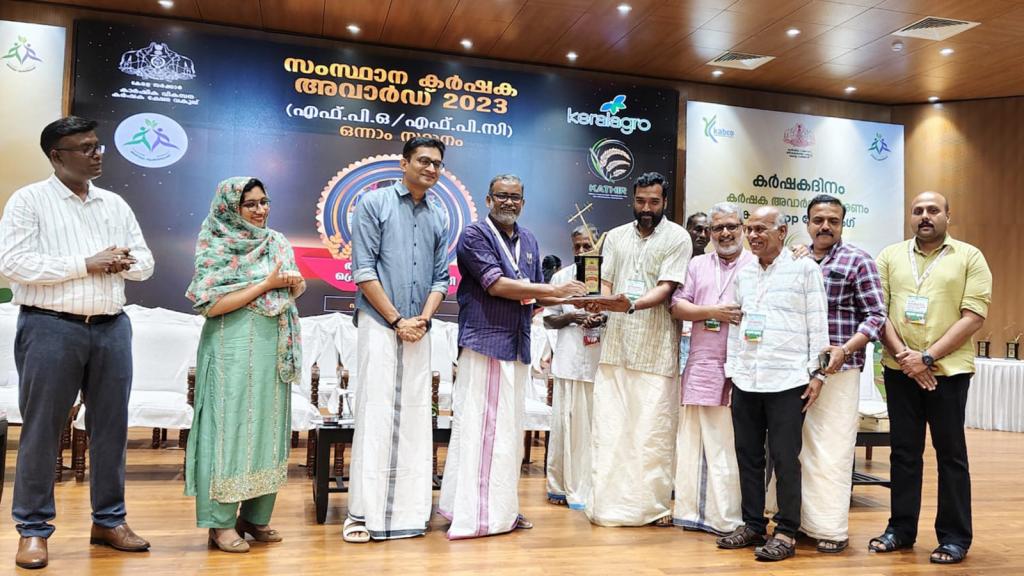
TAPCo receiving the best FPO award by the State Government of Kerala from the State's Agriculture Minister in 2024.
In March 2017, this dream was realised and the Thirunelly Agri Producer Company Limited (TAPCo), was formally registered as an FPO. We also got some help in setting it up from the National Bank for Agriculture & Rural Development and Thanal, a Keralam-based organisation that focused on environment, agriculture, and livelihood generation through research, advocacy, and education.
In the last ten years of its existence, TAPCo has worked closely with over a hundred farmers in our community to promote organic farming, ensuring more than a thousand acres of chemical-free land. This has resulted in over 40 lakh meals of safe and nutritious organic rice, and more than four crores reinvested into our farmers and the local village economy. We have created climate-resilient agriculture methods that are being scaled up and scaled out by others.
Most importantly, we have demonstrated the possibility of fighting against the crisis in farming by joining hands as a farmer’s collective and sowing the seeds of change.
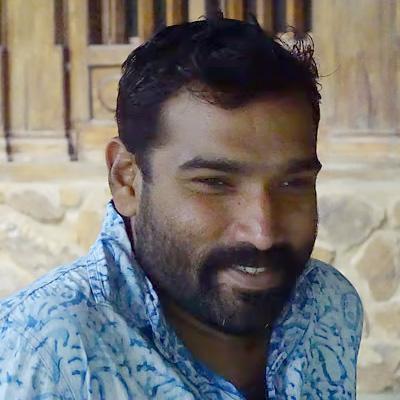
An organic farmer and CEO of Thirunelly Agri Producer Company Limited, Wayanad, Kerala

Sub-editor for Children’s Books, Centre for Science and Environment, New Delhi

Illustrator, Art & Design, Centre for Science and Environment, New Delhi.