


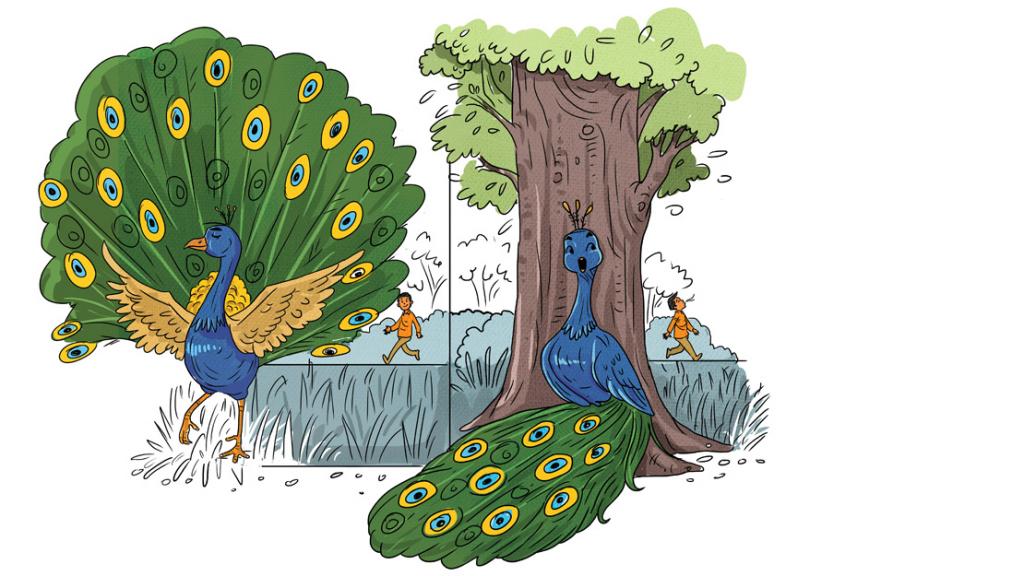
From shy forest dwellers to confident neighbours, Indian peafowl are learning to live alongside people
In recent years, the Indian peafowl (Pavo cristatus) has begun turning up in some surprising places. If you live in South India, you may have seen one stroll calmly through a field, stand proudly inside a temple, or even wander past houses as if it owns the place. Once upon a time, these birds were shy and quick to disappear the moment humans appeared. Today, they seem far less worried. Some peacocks even spread their shimmering feathers in busy spots, as though an audience was always welcome.
Earlier, peafowl preferred open forests, scrubby lands, and the edges of farms. Their meals were simple—seeds, insects, and grains fallen in fields—and they kept a safe distance from people. But observations from areas around Coimbatore and nearby villages tell a new story. These birds often stay put even when people walk close by. During the breeding season, males have been seen dancing near roadsides and public places, tail feathers fanned out in all their glory. Imagine stopping on your way to school and seeing that!
Scientists call this change “habituation.” It means animals slowly stop fearing humans after many harmless encounters. You may have noticed something similar with crows, pigeons, or mynas that hop around without flinching. Peafowl are now joining this bold, city-smart group.
A Growing Peacock Family
Across India, peafowl numbers are rising. The State of India’s Birds (2023) report says their populations are stable or increasing in most places. States like Karnataka, Kerala, and Tamil Nadu have seen especially sharp growth over the last twenty years.
Why is this happening?
When Success Brings Questions
More peafowl sounds like good news—and it is—but it also brings challenges. Farmers in some villages report damaged crops. Large groups of peafowl can affect other ground birds and small animals. Their growing presence near agricultural lands can sometimes lead to demands for population control measures.
All this reminds us of something important: when wildlife changes its behaviour, we need to pay attention. Watching, recording, and learning helps us make sure that people and peafowl can share space peacefully.
Seeing our national bird thrive is heartening. But caring for it also means understanding it—curious eyes open, just like the peacock’s brilliant feathers.
This article has been adapted for a child audience from the author’s original research-focused version by Yashita Mishra.

Assistant Professor of Zoology, PSGR Krishnammal College for Women, Coimbatore, Tamil Nadu

Illustrator, Art & Design, Centre for Science and Environment, New Delhi.